

Emergency Command Center
“Every Call Starts Here”
Processing over 345,000 calls and more than 183,000 incidents annually, the Orange County Fire Authority Emergency Command Center (ECC) is a 24/7/365 operational hub dedicated to rapid dispatch and regional coordination.
The OCFA ECC is staffed 24 hours a day, 365 days a year, by our highly trained Fire Communications Dispatchers. Each shift is overseen by a Fire Communications Supervisor who is supported by the ECC Manager, ECC Operations Supervisor, and the Division Chief of Command and Emergency Planning.
OCFA’s Emergency Command Center (ECC) serves not only as the primary coordination hub for local emergency response but also plays a critical regional and statewide role. As the designated Cal OES Operational Area Coordinator for the County of Orange within Region I, OCFA is responsible for coordinating mutual aid resources and supporting incidents across the operational area and throughout California’s statewide system. In addition, as a CAL FIRE contract county, OCFA provides wildland fire protection across the State Responsibility Area in Orange County and facilitates the ordering, mobilization, and coordination of resources to ensure effective response both locally and in support of incidents across the state.
How do I become a Fire Communications Dispatcher?
- Submit a job interest card (opens in new tab). Select “Dispatch” and subscribe to be notified when the position becomes available.
-
Core Responsibilities:
- Receive, process, and triage emergency 911 calls.
- Dispatch fire, EMS, and aircraft resources across the region.
- Provide critical tactical support and tracking for field crews during major incidents.
-
Schedule:
- 12-Hour Shifts: Operational 24/7/365 (includes nights, weekends, and holidays).
- Mandated Overtime: Candidates must be prepared for extended operational needs, including up to 60 consecutive hours during regional emergencies or staffing shortages.
-
Compensation:
- Salary: $69,885.92 – $94,203.20 annually (reflects May 2026 adjustment).
- Employment: Full-time position featuring a comprehensive medical, dental, and retirement benefits package.
- Support: Fully paid academy training and an annual uniform allowance.
What happens when you call 911?
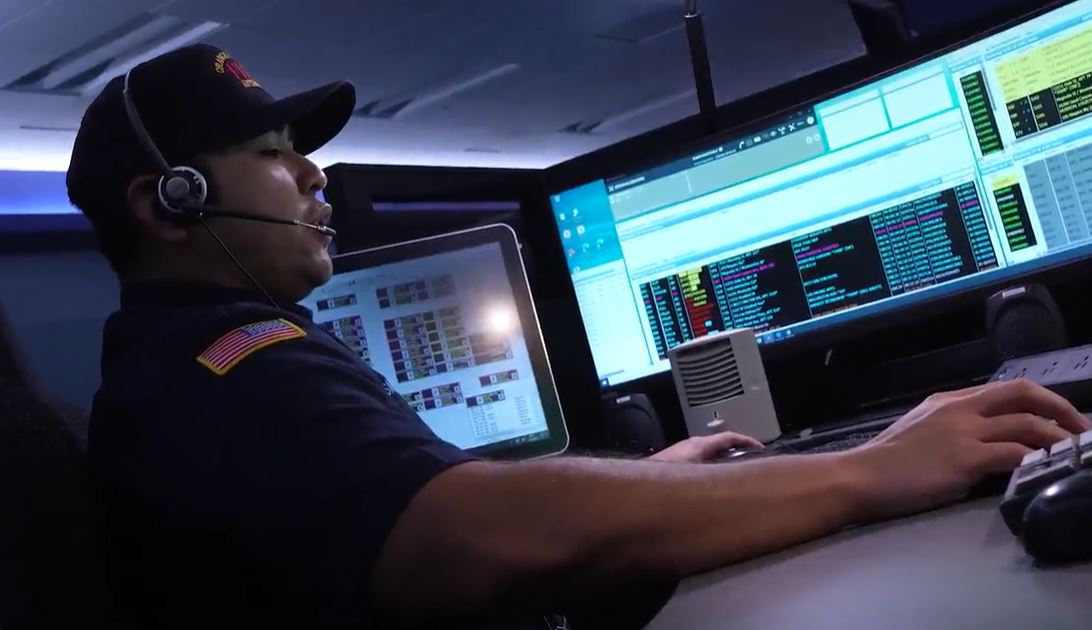
When you dial 911, your call is routed to the appropriate Public Safety Answering Point (PSAP), typically the law enforcement agency serving the area from which you are calling. Your call is then quickly routed to the appropriate fire, medical, or rescue agency based on your location and nature of the emergency.
If your emergency involves fire or the need for medical care or rescue within the Orange County Fire Authority’s jurisdiction, your call will be transferred to the OCFA Emergency Command Center (ECC). A Fire Communications Dispatcher will answer and ask a few questions to assess the situation and send help as quickly as possible.
Units are promptly dispatched once the following three questions have been answered:
- The address of the emergency
- The phone number you are calling from
- The nature of the emergency
OCFA dispatchers are often called the “first” first responders, playing a vital role in the chain of survival through Emergency Medical Dispatch (EMD). While responders are on the way, dispatchers stay on the line to provide lifesaving instructions, such as guidance for CPR, choking emergencies, or bleeding control, and to gather important information to share with responding crews.
Text to 9-1-1: “Call if you can, text if you can’t”
When to Use Text-to-911
- You cannot safely speak during an emergency
- You are unable to hear or speak
- A voice call cannot be completed due to poor signal strength
Important Information to Include
- The first text message to 9-1-1 should contain your exact location, a brief description of the emergency, and the type of help needed (police, fire, or ambulance)
- Text in simple words. Do not use abbreviations, emojis, or slang
- Keep text messages brief and concise
⚠️ Unlike voice calls, Text-to-911 may not automatically provide precise location information.
A Reminder for the Community
While texting is a powerful alternative, the gold standard for emergency response remains a voice call, leading to the regional safety motto: "Call if you can, text if you can’t."
Regional and Operational Responsibilities
Office of Emergency Services (OES) Operational Area Coordinator
Beyond serving our local community, the OCFA ECC serves as the California Office of Emergency Services (OES) Operational Area Coordinator for the County of Orange within Region One. In this role, we act as a critical nerve center for Orange County, facilitating the movement of fire engines, strike teams, and specialized resources across county lines during large-scale emergencies. Whether it is a regional earthquake or a major wildfire in a neighboring jurisdiction, our center provides the logistical backbone and interagency communication necessary to ensure that the right resources are deployed where they are needed most, regardless of city borders.
Cal Fire Contract County
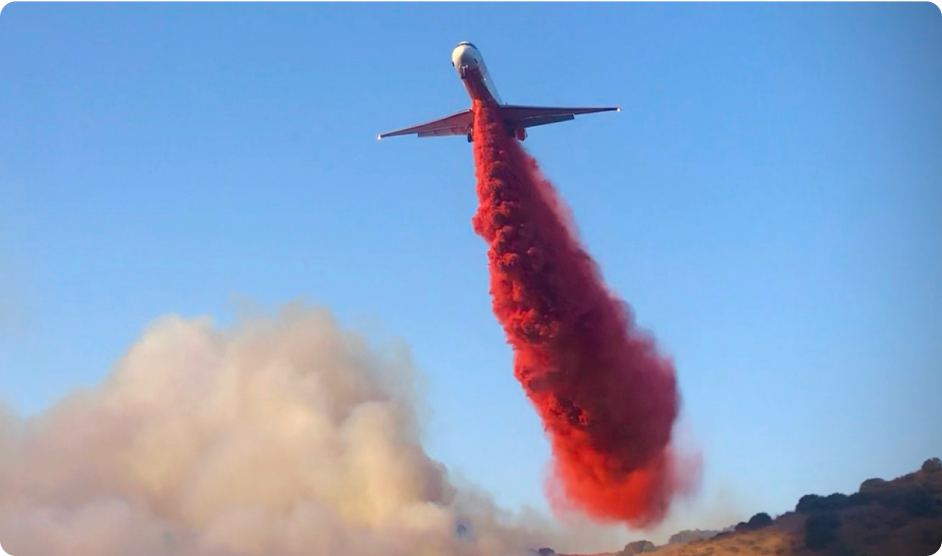
As a Cal Fire contract county, OCFA is responsible for protecting state responsibility land within the County of Orange. The ECC coordinates closely with Cal Fire for wildland fire response, resource mobilization, aircraft ordering, and state mutual aid operations.
Department Operations Center (DOC)
The Department Operations Center (DOC) serves as OCFA's central coordination and support element during major incidents, extended emergencies, and internal disruptions. Its primary role is to ensure continuity of operations throughout the OCFA service area. While field Incident Command retains responsibility for incident objectives, strategy, and tactical control, the DOC focuses on strategic coordination, resource management, logistical support, interagency coordination, and executive-level situational awareness. This allows field commanders to remain focused on incident operations. The DOC is activated to manage scarce resources, support large or multiple incidents, and maintain OCFA’s ability to continue providing emergency services to the community during high-impact or prolonged events.
Expanded Dispatch
During significant incidents such as major vegetation fires, disasters, or complex multi-agency events, the ECC transitions to Expanded Dispatch. This increases staffing and coordination capabilities to manage large resource orders, strike teams, aircraft, and logistical support.
ECC Duty Officers
OCFA’s ECC Duty Officer provides around-the-clock operational oversight within the Emergency Command Center, ensuring that every incident is managed with the benefit of seasoned field experience. Staffed by highly experienced Battalion Chiefs, the Duty Officer continuously monitors system status, evaluates incident complexity, and adjusts resource deployment to maintain effective coverage across the county.
Serving as a critical bridge between field operations, agency leadership, and regional partners, the ECC Duty Officer supports incident commanders by ensuring the right resources are ordered, coordinated, and mobilized at the right time. Their presence in the ECC 24/7 enhances situational awareness, strengthens decision-making, and ensures that both routine emergencies and large-scale incidents are managed with a high level of operational discipline and coordination.
Technology
OCFA uses a multitude of technological resources to provide the fastest service to the communities we serve. These include:
- Computer‑Aided Dispatch (CAD)
The ECC uses a state‑of‑the‑art Computer‑Aided Dispatch system to receive incidents, track resources and coordinate the response of fire and EMS resources across Orange County. CAD integrates unit status, incident data, and location information to support rapid, accurate dispatch decisions. - Automatic Vehicle Location
Automatic Vehicle Location (AVL) technology allows the Orange County Fire Authority to dispatch the closest, most appropriate fire and EMS resources to every emergency. By continuously tracking the real‑time location of OCFA units, our Computer‑Aided Dispatch system can instantly identify which resources can arrive the fastest—often without delay or additional manual steps. This ensures quicker response times, improved coverage across our communities, and faster help when seconds matter most. -
Geographic Information Systems (GIS) & Mapping
ECC dispatchers and supervisors use GIS‑based mapping tools to visualize incidents, unit locations, and jurisdictional boundaries in real time. These tools support situational awareness, resource placement, and coordination during both routine calls and large‑scale incidents. -
Technology-Enhanced 911 Services
Dispatchers use enhanced location tools that provide precise caller location data, even when a caller is unable to speak or unsure of their surroundings. This capability improves response times and responder accuracy during critical incidents. -
AlertCalifornia Intelligence & Anomaly Detection
Along with other sensor and detection platforms, ECC personnel monitor and utilize the AlertCalifornia wildfire camera and intelligence system to enhance situational awareness. The system provides anomaly detection alerts, which indicate potential smoke or fire activity. ECC staff review and verify these alerts using available intelligence sources to initiate dispatch of appropriate field resources. This capability supports early detection, fire growth monitoring, and real-time intelligence sharing with command staff and partner agencies.
Stay Informed with AlertOC
To help residents prepare for emergencies such as wildfires, floods, or earthquakes, the Orange County Fire Authority uses AlertOC, a mass notification system that delivers time-sensitive alerts and safety instructions. By registering, residents and businesses can receive emergency notifications by voice, text, or email on home, cell, or business phones, ensuring critical information comes directly from the Emergency Command Center when it matters most.
Sign up for AlertOC
(opens in new tab)
FAQ
Why do dispatchers ask so many questions?
Dispatchers ask detailed questions to get you the right help as quickly as possible. Your answers are relayed in real time to responding paramedics and firefighters, helping them prepare while they are already on the way.
Dispatchers can also guide you through critical steps such as CPR, the Heimlich maneuver, stopping severe bleeding, or even assisting with childbirth until help arrives. Every question has a purpose, helping keep callers, patients, and bystanders safe.
What information do I need to provide?
- The address of the emergency
- The phone number you are calling from
- The nature of the emergency
Dispatchers use advanced technology to help identify a caller’s location, and in many cases it appears on their screen. However, location data is not always accurate or available, so dispatchers will still ask callers to confirm their location to ensure help is sent to the right place as quickly as possible
What if a caller doesn’t speak English?
To ensure every member of our community receives life-saving assistance, the Orange County Fire Authority utilizes a 24/7 professional interpreter service. If a caller’s primary language is not English, our dispatchers can immediately connect a third-party interpreter to the line. Using established protocols, the dispatcher, the caller, and the interpreter work together to gather critical location and medical information. This seamless integration allows our Emergency Command Center to provide the same high level of emergency instructions—such as CPR or bleeding control—regardless of the language spoken by the caller.
How can I receive emergency alerts and notifications?
By registering with AlertOC, you can receive emergency alerts and notifications via voice, text, or email on your home, cell, or business phone. This helps keep you informed and prepared during emergencies like wildfires, floods, or earthquakes.
Sign up for AlertOC
(opens in new tab)
What is PulsePoint?
We believe that a prepared community is a safer community, which is why the OCFA integrates with PulsePoint, a powerful mobile app that alerts CPR-trained citizens to nearby cardiac arrest events in public places. When our dispatchers send an ambulance to a cardiac emergency, PulsePoint simultaneously notifies nearby app users, often allowing life-saving chest compressions to begin before our crews even arrive. By bridging the gap between our Emergency Command Center and the public, we empower you to play a direct role in the chain of survival.
Sign up for PulsePoint
(opens in new tab)