

June 22, 2026
Before You Light That Fuse: What Every OC Resident Should Know About Fireworks This Year
Every Fourth of July, the same scene plays out across Orange County: the smell of charcoal in the air, kids running around with sparklers, and somewhere in the distance, the telltale boom of fireworks that aren't legal. For most families, the night ends with fond memories and tired kids. But for a growing number of OC residents, it ends in the emergency room and lost limbs.
According to the Orange County Fire Authority’s 2024 Independence Day After Action Report, firework-related injuries across the county jumped 43% last year alone. That’s not a typo, and it’s not an isolated trend, it’s part of a national pattern. Nationally, the Consumer Product Safety Commission estimates 14,700 fireworks injuries and 11 deaths in 2024, a roughly 50% increase over the year before.
“Legal” Doesn't Mean “Safe”
One of the most common misconceptions is that fireworks are mostly legal here. They’re not. “Safe and Sane” fireworks (the kind sold at your local neighborhood stand) are only legal in twelve OC cities: Anaheim, Buena Park, Costa Mesa, Fullerton, Garden Grove, Huntington Beach, Los Alamitos, Orange, Santa Ana, Stanton, Villa Park, and Westminster.
If you live in any other city in OC, all fireworks (including sparklers) are illegal, full stop. And even in cities where Safe and Sane fireworks are permitted, they're banned in state and county parks, beaches, harbors, unincorporated areas of the county, and the Cleveland National Forest.
This isn’t a minor technicality. Possessing illegal fireworks in California can carry a fine of up to $50,000 and up to a year in jail. And several OC cities including Buena Park and Stanton— have recently introduced “social host” ordinances, meaning property owners can be fined $1,000 to $3,000 just for having illegal fireworks used on their property, even if they didn't light them.
The Sparkler Problem
If there’s one fact that surprises people most, it’s this: sparklers are responsible for more injuries than almost any other type of firework, and they're often the ones parents hand directly to small children.
Here's why. A sparkler burns at around 1,200 to 2,000 degrees Fahrenheit. That’s hot enough to melt some metals. Wood and dry vegetation ignite at around 356 degrees. That means a sparkler is roughly five times hotter than the temperature needed to start a fire in your own backyard.
In 2024, sparklers alone sent an estimated 1,700 people to the emergency room nationwide. That’s more than double the figure from the year before. And it's not just burns from holding them.
What You Can Do
The good news: none of this requires giving up the celebration. It just requires a shift in how you celebrate.
- Check out what’s legal in your city before you buy or use anything. Check out OCFA.org/FourthofJuly for more details
- Skip sparklers for young kids. Consider alternatives like glow sticks or confetti poppers.
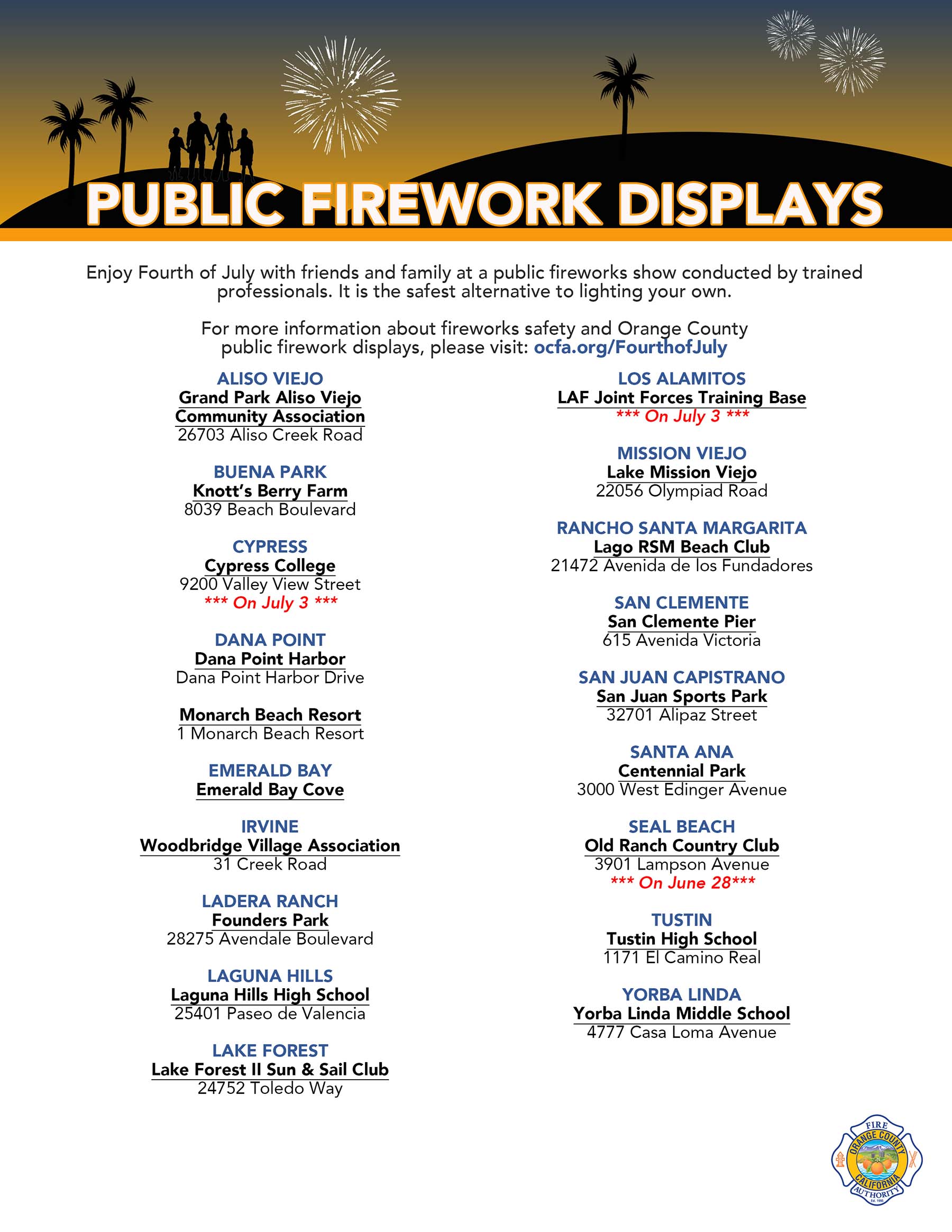
- Go to a public show. Orange County has no shortage of professional displays — they’re free, beautiful, and dramatically safer than anything you can do in a driveway. A full list can be found at OCFA.org/FourthofJuly
- Keep water nearby. If you’re in a city where Safe and Sane fireworks are legal, keep water nearby, and never use them on dry grass, near brush, or on windy days.
- Talk to your kids. Just because others are doing it doesn’t mean it’s legal or safe.
Fireworks are part of how a lot of us celebrate the Fourth of July, and that’s not going away. But understanding the real risks and very real rules could be the difference between a celebration everyone remembers fondly, and one that ends with a trip to the emergency room.
You may also like